

Technically reviewed by Maximilian Fromm, independent vehicle expert (B.Sc. in Mechatronics). Last updated: September 2026
Eight arguments that we see in reduction letters (Kürzungsschreiben), and the documentation in the report (Gutachten) that answers each one.
This page is about the expert's fee, not about reductions of the repair costs. Those are covered on the page about fictitious settlement (fiktive Abrechnung).

Maximilian Fromm
Founder and Mechatronics Engineer (B.Sc.)
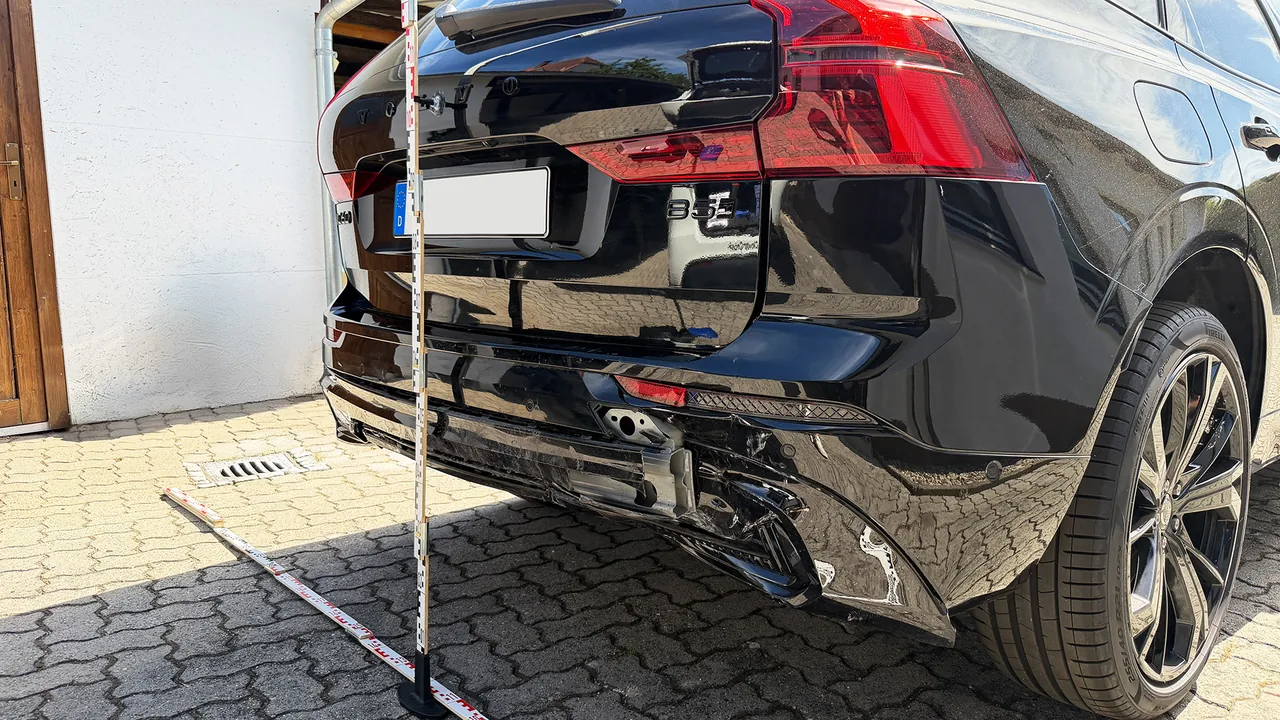
When an insurer settles a vehicle damage claim, an outside review company often checks more than the repair calculation. It also checks the expert's invoice. In our cases, the same eight arguments appear again and again. The wording changes, but the structure is clearly the same.
The reduction letters that reach us repeat the same text blocks, no matter what work the car needed. This is where we start. A text block does not know the individual case, but a report does. For each argument, we show below which part of the report gives a documented fact about the car that contradicts the general assumption.
We cover reductions of the repair costs separately on the page about fictitious settlement. Examples are hourly labor rates (Stundenverrechnungssätze), markups on parts list prices (UPE-Aufschläge) or transfer costs (Verbringungskosten).
Arguments compared, arguments 1 to 3. Arguments compared, arguments 4 to 6. Arguments compared, arguments 7 and 8.
Five check steps that come back in the answers above and in the frequently asked questions.
Compare each disputed item with the original invoice before you respond.
Important: Do not reply to the letter yourself. Send it to the expert office you hired or to the law firm handling your case. Check the letter for a deadline.
Check whether each disputed item has a reason that refers to the specific report, or whether the letter only refers to a table in general.
Count the photos. Measure the route again. Count the pages. Compare the numbers with the upper limit named in the letter.
If questions remain, contact the law firm or the expert office directly.
Did you receive a reduction letter? This overview explains reduction arguments. If you have a specific reduction letter about one of our reports, we review it from a technical view. Then we write an expert statement (Stellungnahme) for the law firm handling the case. The page about the rights of the person whose car was damaged lists which points are often missed besides this. Our guide article explains when it is worth challenging a vehicle report and how the process works.
A recurring argument says this: without membership in a certain association, there is no reference for an appropriate fee, so the fee should be based on time spent instead of the amount of damage. Association status is not a legal requirement for this work. Check whether the letter refers to a comparison with usual local prices, or only names the missing association status.
In our cases, the letter only names the missing certificate and gives no assessment of the report content. Ask which objection to the content is behind it. Only a statement about the content explains the reduction to someone outside the case.
In our cases, the letter limits the driving distance to a fixed number of kilometers. Above it, the trip cost is reduced. Check which address is used as the starting point of the distance calculation. Measure the route yourself and compare the stated kilometers with a map app.
A common argument limits the billable pages to a fixed number, no matter how much documentation there is. Count the pages of the report including appendices and compare them with the stated upper limit. For complex damage with several items, the real length is often higher.
A reduction letter is a written notice, usually from the insurer handling the claim or from a review company working for it. In it, single items of the fee invoice are disputed and reduced. It usually names single items with a reduced amount. Compare each disputed item with the original invoice before you respond.
Important: Do not reply to the reduction letter yourself. Send it to the expert office you hired or to the law firm handling your case. Check the letter for a deadline. Keep the invoice and the reduction letter together, so the single items can be matched later.
Check whether the letter gives a reason for each disputed item that refers to the specific report, or only refers to a table in general. Check each item to see whether a link to the damage case is visible. If it is missing throughout, a technical second check is worthwhile.
That depends on the contract terms in the individual case and cannot be answered in general. Check whether the order letter or the invoice has a rule about who pays the amount that the insurer cut. If it is unclear, ask the law firm or the expert office directly.
In our cases, the letter sets a fixed upper limit, no matter how much damage there actually is. Count the photos in the report and compare the number with the damage description. For widespread scattered damage or several affected parts, a fixed upper limit often does not cover the effort.
In our cases, the letter says reports are sent electronically anyway, so a second set is not needed. Check whether a second set was actually made, for example because a law firm asked for a paper copy. Compare the recipient list with the invoice.
The argument says the extra photo documentation and assessment of possible blend painting is part of the basic service. Check whether the report shows separate time or photo effort for it. With metallic and effect paints, the color impression depends on the light. The assessment must be made at the vehicle.
A recurring argument treats finding the paint color at the vehicle as a side service, even if a separate appointment or a measuring device was needed. Check whether the report documents time spent or a measurement for it. Compare this effort with the removed item.
Service: Technical review of a reduction letter for the law firm handling the case. Open topic
Knowledge hub: Reductions of the repair costs instead of the expert's fee. Open topic
Knowledge hub: Eight points after an accident, each with the usual next step. Open topic
Knowledge hub: The overview of all topic pages about vehicle damage. Go to overview
Direct line to the expert: We check the technical side of a reduction letter and record what is documented in the report. The traffic law lawyer decides whether and how to claim a remaining amount. If you have questions about pursuing the claim, we recommend a law firm that focuses on traffic law. We receive no commission for this.
CleverCrash is an office of independent vehicle experts, not a law firm. This page is general consumer information and does not replace legal advice in an individual case.
Last updated: September 3, 2026. The page reflects the information known at that time.
Maximilian Fromm
Independent vehicle expert, B.Sc. in Mechatronics
Maximilian Fromm is an independent vehicle expert and the founder of CleverCrash in Erlangen. He studied mechatronics. Since August 2025, he has written damage reports (Unfallgutachten) for private customers, repair shops and lawyers in the Nuremberg Metropolitan Region. He supports his customers until the insurer pays out.
