

Technically reviewed by Maximilian Fromm, independent vehicle expert (B.Sc. in Mechatronics). Last updated: September 2026
A wild animal accident certificate (Wildschadenbescheinigung) confirms that a collision with a wild animal (Wildunfall) was reported at a certain place and time. The hunting tenant (Jagdpächter) or the police usually issue it. In our cases, insurers with comprehensive coverage (Teilkasko) regularly require it as proof. So get the certificate on the day of the accident if possible. An expert check of the evidence shows whether the damage pattern on the vehicle matches the reported collision.
What an independent vehicle expert can determine from the damage pattern, and when a repair estimate (Kostenvoranschlag) is enough.
Difference from game damage, evidence on the vehicle, plausibility and the role of the wild animal accident certificate. From the mechatronics engineer (B.Sc.) and independent vehicle expert for damage and valuation.
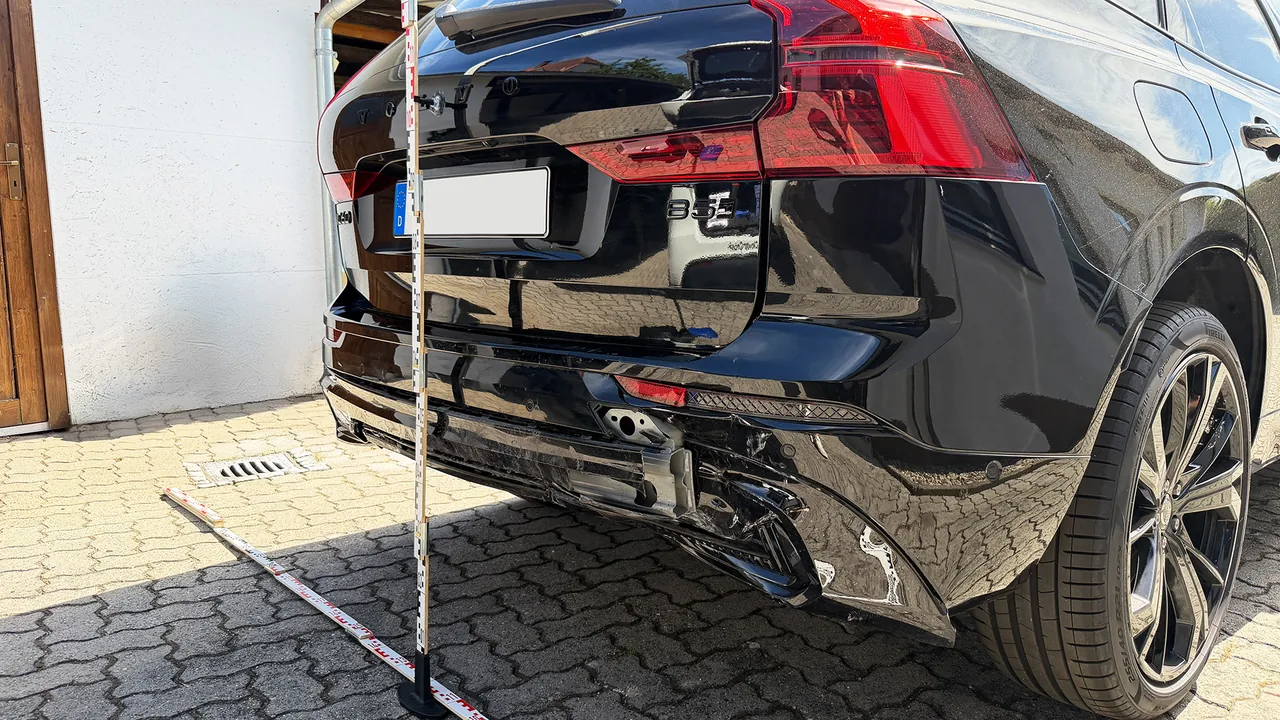
In daily life, people often use the German words "Wildunfall" (collision with a wild animal) and "Wildschaden" (game damage) as if they were the same. Technically, they are two different things. A collision with a wild animal is the traffic accident itself: a vehicle hits an animal directly. The term game damage comes from hunting law. There it means damage that wild animals cause to farmland. In everyday speech, people also use it for damage to the car, and this causes the confusion.
For comprehensive coverage, there is a third distinction: which animals the policy terms count as game. Many policies mention furred game (Haarwild). This mainly means roe deer, red deer, wild boar and hares. Other policies use an extended wild animal clause. It also covers birds, farm animals or accidents while avoiding an animal, without contact with it. Which definition applies in your contract is a question about your policy. We do not clarify it. But from the damage pattern, we can see which animal and which course of events fit.
You can find regional figures and the steps right after the collision on our local page for Lauf an der Pegnitz.
A collision with a wild animal leaves a pattern of traces that differs from ordinary sheet metal damage. We document these signs separately. Only after that do we assess them together.
A dent alone says little. We can understand the course of events only when four signs fit together: the type of fur, the blood trace, the impact height and the direction of deformation. For this reason, we take high-resolution photos of the affected areas at the inspection, before a repair shop replaces or cleans any parts.
When we record the findings, we also ask whether the damage pattern matches the described course of events. This is not about distrust. It is a technical check that is also in the interest of the person whose car was damaged. Only a plausible case can lead to a smooth claim settlement (Regulierung).
Does the reported animal match the measured impact height and the fur trace on the vehicle? A male roe deer leaves a different pattern than a wild boar or a badger.
Does the direction of deformation match the described driving direction and any evasive movement?
Are there traces that the described course of events does not explain, for example a second, older area of damage?
Is the amount of damage technically consistent with a single contact with a wild animal, or does it point to an additional event?
If one point clearly does not match, we record this in the report (Gutachten). We do not draw a legal conclusion from it ourselves. This assessment stays with the responsible insurer or, if needed, with a traffic law lawyer.
In our cases, insurers with comprehensive coverage regularly require this certificate as proof that a wild animal was involved, because it documents the event independently of the vehicle damage. If it is missing, processing in our experience takes much longer. We do not issue the certificate ourselves. That is outside our role. What we provide is a technical check: we determine whether the damage pattern on the vehicle matches this reported event.
Important: Get the wild animal accident certificate on the day of the accident if possible. Later, the event is hard to prove.
Not every accident involving wildlife is a collision with a wild animal in the narrow sense. Someone may steer away from an animal without touching it. Then an accident happens, for example after a hard steering movement. The car may hit a guardrail or skid. Technically, this is a different type of damage. There is no direct contact with an animal. So the typical traces, such as fur or blood, are missing too.
On the vehicle, this looks different. You do not find small impact marks with fur or blood. Instead, you may find damage under the car from sudden steering or braking. You may also find strain on tires and suspension, or damage from a fixed obstacle. We make this distinction purely on technical grounds. We do not assess which insurance applies in the specific case. What matters is that both parts are documented separately and clearly in the report.
A simple repair estimate usually only describes which parts to replace and which work to do. It leaves open whether the damage pattern matches the course of events, and it usually documents the evidence only on the surface. If the case is clear and the amount of damage is small, this is often enough. For a short, structured cost range, we offer the condensed report (Kurzgutachten).
When the evidence becomes more complex or several parts of the damage come together, we work with a full Damage report(Unfall- und Schadengutachten). It combines evidence, plausibility and amount of damage in one document.
In our cases, insurers with comprehensive coverage often send their own reviewer after a reported collision with a wild animal, instead of asking for a report. This is a sensible way to handle simple cases quickly. The difference lies in who gives the order. The insurer hires the reviewer. You, as the person whose car was damaged, hire an independent vehicle expert. Both work to technical standards, but they work for different clients.
A second expert check is worthwhile in our cases mainly in two situations. The evidence and the course of events may not fit together well. Or there may be an additional part of the damage. The check should happen before the repair starts and traces are lost. You decide which way to go together with your insurer. If you have open questions about claim settlement, ask a traffic law lawyer.
A collision with a wild animal is a collision between a vehicle and a wild animal, mostly a roe deer, wild boar or fox. The term game damage comes from hunting law. There it means damage that wild animals do to fields or forest. In everyday speech, people also use it for damage to the car, which leads to confusion. Report the event to the police or the hunting tenant. This creates the basis for the wild animal accident certificate.
We look for fur and hair on the bumper, for blood traces and for the impact height compared with the size of the animal. The direction of deformation of the sheet metal shows the angle from which the animal came. A roe deer leaves different traces than a wild boar. Take photos of the contact points before you clean the vehicle. This preserves the evidence for the inspection.
We compare impact height, width of damage and type of trace with the typical size of the reported animal. A male roe deer leaves a different pattern than a wild boar or a badger. If the pattern does not match the report, we record this in the report and describe the difference factually. If you have a photo of the accident scene, please bring it. It makes the comparison easier.
The certificate confirms that a collision with a wild animal was reported at a certain place and time. Where possible, it names the animal species. It is usually issued by the person entitled to hunt in the area, often the hunting tenant, or by the police. In our cases, insurers with comprehensive coverage regularly require it as proof. Get the certificate on the day of the accident if possible. Later, the event is hard to prove.
In our cases, insurers with comprehensive coverage often send their own reviewer for damage from wild animals. We compare the reviewer's assessment with our own findings on the vehicle, for example for components that are hard to see in a photo. If the results differ, we show the specific measuring points. Keep both reports until the case is closed.
Even without an animal at the scene, reporting the event stays important, because it creates the basis for the certificate. We assess the vehicle damage whether or not the animal is found. The traces on the sheet metal are enough for the technical assessment. Write down the time and the direction in which the animal fled right after the collision. This makes it easier for the hunting tenant to confirm the event later.
In our cases, insurers with comprehensive coverage often accept a repair estimate from the repair shop for smaller damage. A report is worthwhile if prior damage (Vorschaden) is disputed, the amount of damage stays unclear or a total loss (Totalschaden) is possible. We tell you in advance whether a report adds anything technically. Please discuss the extent of the damage with your insurer first.
That depends on the terms of your contract, not on our technical opinion. In our cases, insurers then usually ask for proof that a wild animal really was the cause, for example through witnesses or traces at the roadside. We document damage that happened while avoiding an animal, whether or not there was direct contact. Please clarify the question of payment with your insurer.
Fur and blood residue dry out and become brittle within a few days. In rain or after a wash, they often disappear right away. The deformation in the sheet metal, however, stays visible permanently. The earlier we inspect the vehicle, the more clearly we can identify the animal species from the evidence. If possible, do not wash the vehicle until the inspection.
A marten bite on cables or hoses shows no impact traces on the sheet metal. It shows fine tooth marks in the engine compartment. A marten is a small wild animal that often bites cables in parked cars. A collision with a wild animal, on the other hand, leaves deformation, fur and often blood at the front. The cause is technically very different. Both types of damage are usually handled under comprehensive coverage. Whether and to what extent your comprehensive coverage pays depends on your contract.
Technically, we inspect leased vehicles and purchased vehicles by the same standards. The evidence and the amount of damage decide the scope. For leased vehicles, we also pay attention to a professional repair, because return conditions often have strict rules about the condition. We record the repair method in the report so that it is easy to follow. Please also check return deadlines with your leasing company.
Service: The short, structured cost range for smaller damage. Open topic
Service: Evidence, plausibility and amount of damage in one document. Open topic
Knowledge hub: Eight points after an accident, each with the usual next step. Open topic
Knowledge hub: The overview of all topic pages about vehicle damage. Go to overview
We tell you in advance whether a report adds anything technically for your case, or whether a repair estimate is enough. Whether and to what extent your comprehensive coverage pays depends on your contract. Please clarify this with your insurer. For open questions about claim settlement, we recommend a traffic law lawyer. We receive no commission for this.

CleverCrash is an office of independent vehicle experts, not a law firm. This page is general consumer information and does not replace legal advice in an individual case.
Last updated: September 3, 2026. The page reflects the information known at that time.
Maximilian Fromm
Independent vehicle expert, B.Sc. in Mechatronics
Maximilian Fromm is an independent vehicle expert and the founder of CleverCrash in Erlangen. He studied mechatronics. Since August 2025, he has written damage reports (Unfallgutachten) for private customers, repair shops and lawyers in the Nuremberg Metropolitan Region. He supports his customers until the insurer pays out.
